
In business, we’re often taught that success comes from confidence, certainty, and being the strongest voice in the room. Assumptions are we need to speak louder, move faster and project authority before you feel it. The culture around entrepreneurship and leadership has long rewarded the boldest personality, the most aggressive strategy, the person who never appears to doubt themselves. But the more I grow—in both my work and my faith—the more I’m reminded that the foundation of lasting success looks very different from what the world tends to celebrate.
Scripture consistently points to humility as a position of strength, not weakness. “God opposes the proud but gives grace to the humble.” That’s not just a spiritual principle—it’s a deeply practical one. The leaders who build something meaningful over time are often the ones who stay teachable, who listen more than they speak, and who recognize that their success isn’t theirs alone. Humility isn’t a liability dressed up in religious language. It’s one of the most underestimated competitive advantages available to any person who is serious about building something that lasts.
What Humility Actually Means
Before we go further, it’s worth being honest about what humility is not. Humility is not self-deprecation. It’s not pretending you don’t have gifts or downplaying what you’ve built. It’s not shrinking yourself so others feel more comfortable, and it’s not the absence of ambition. Confusing humility with weakness is one of the most common and costly mistakes a leader can make.
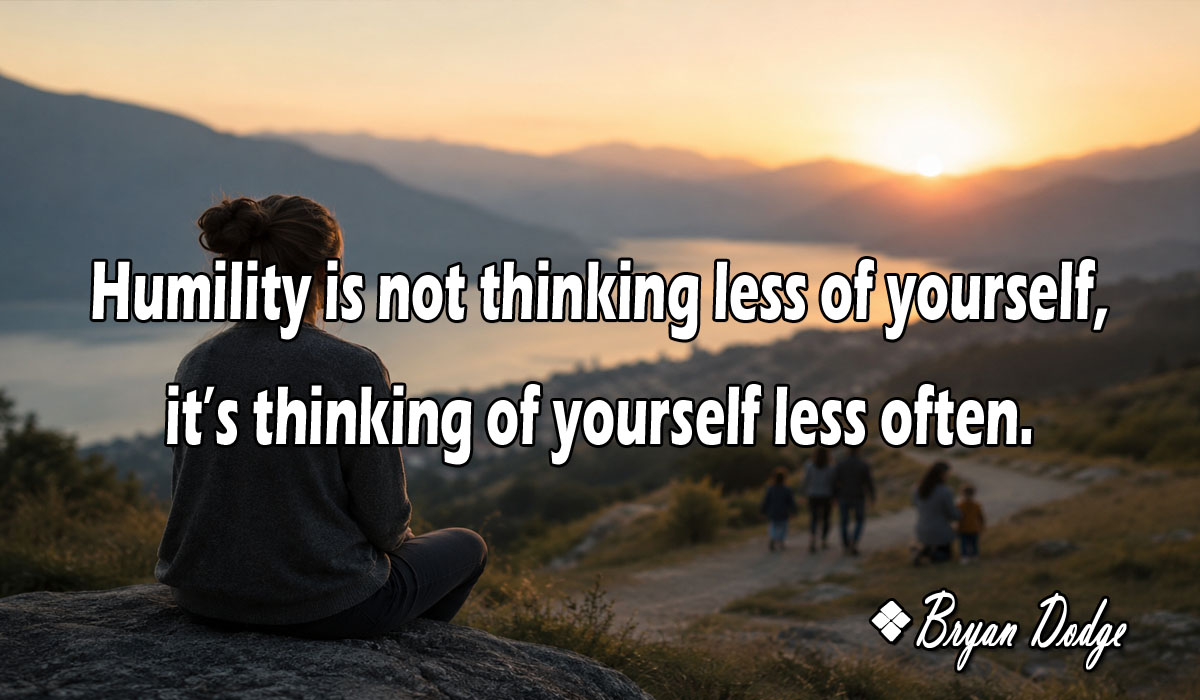
True humility is simply the accurate understanding of who you are, where your abilities come from, and how much you still have to learn. It’s the person who has every reason to feel superior but chooses curiosity over judgment. It’s the leader with twenty years of experience who still asks questions in the meeting instead of assuming they already know the answer. It’s the business owner who gives their team credit publicly and absorbs criticism privately. Humility is not thinking less of yourself—it’s thinking of yourself less often.
That shift in orientation changes everything.
The Hidden Cost of Pride
Pride in leadership often masquerades as confidence. It sounds like certainty. It looks like decisiveness. And in the short term, it can even produce results. A proud leader can rally a room, close a deal, and build momentum. But pride has a long tail, and eventually it creates a ceiling.
When pride is running the show, information stops flowing freely. Team members learn quickly that bringing bad news or challenging ideas isn’t safe, so they stop doing it. The leader starts operating on incomplete data without realizing it. Blind spots multiply. Small problems go unaddressed until they become large ones. And the leader, isolated at the top of a culture they’ve unknowingly created, wonders why growth has stalled or why the best people keep leaving.
Pride also tends to make us territorial. We protect our ideas instead of refining them. We resist partnerships because we don’t want to share credit. We avoid mentors because asking for help feels like admitting weakness. All of this adds up to a slower, lonelier, and ultimately less fruitful path than the one that was available to us.
The ancient wisdom that God opposes the proud is not a threat—it’s a description of how reality works. When you stop being teachable, reality has a way of teaching you anyway, just much more painfully.
How Humility Opens Doors
Here’s where the story gets genuinely encouraging. Humility doesn’t just remove obstacles—it actively creates opportunity.
When you’re known as someone who listens, people bring you their best thinking. When you’re willing to say “I don’t know,” your team brings you the truth instead of the version they think you want to hear. When you give credit generously, people work harder because they know their contribution will be seen. When you stay curious about other perspectives, you see around corners that proud people never notice.
Humility also builds trust at a remarkable pace. In a world full of people performing expertise and projecting certainty, a leader who says “that’s a great question—I’m not sure, let’s find out” stands out. Clients trust them more. Employees stay longer. Partners want to do business with them again. Trust, once established, compounds. It becomes the invisible infrastructure that makes every other part of the business run more smoothly.
There’s also a spiritual dimension to this that can’t be ignored. When we loosen our grip on the need to control outcomes and protect our own image, we create space for something larger than ourselves to work. Faith and humility are deeply connected—both require a kind of release, a willingness to operate from a place of trust rather than self-sufficiency. The leaders I’ve seen build the most remarkable things are almost always people who hold their work with open hands, who acknowledge they didn’t get there alone, and who genuinely believe that more is possible than what they can engineer through sheer force of will.
Staying Teachable in a Culture That Rewards Certainty
One of the hardest parts of practicing humility in business is that the culture often punishes it. Investors, clients, and even your own team sometimes want to see unshakeable confidence. Saying “I’m still learning” can feel risky when the stakes are high. So how do you stay genuinely humble while still leading with conviction?
The key is to separate certainty about your values from certainty about your methods. You can be absolutely clear about who you are, what you stand for, and where you’re headed while remaining completely open about how you’re going to get there. That kind of grounded humility—rooted in character rather than in pretending to have all the answers—is not only more honest, it’s more compelling to the people around you.
Practically, this might mean building regular feedback loops into your work. It might mean surrounding yourself with people who are genuinely willing to tell you when you’re wrong. It might mean reading books and having conversations that challenge your current thinking rather than only confirming it. It might simply mean slowing down before you react, asking one more question before you decide, or acknowledging aloud when someone else’s idea was better than yours.
None of these things are complicated. But they do require intention, because the pull toward self-protection is constant.
Abundance Is Not What We Think
We tend to picture abundance as the destination you arrive at after the hustle—more money, more recognition, more freedom. But real abundance, the kind that doesn’t evaporate when circumstances shift, is rooted in something deeper. It’s built from relationships where people genuinely trust you. It’s found in work that aligns with a purpose larger than personal gain. It exists in communities and teams that feel like something worth belonging to.
That kind of abundance is not produced by self-promotion. It’s not the result of being louder or more aggressive or better at controlling your image. It grows quietly, over time, in the soil that humility prepares. It comes from being the person others want to go into business with, the leader whose team will follow them into the next venture, the individual whose reputation is built on integrity rather than performance.
This month, I’ve been sitting with a truth that feels increasingly important the longer I work and the more I pay attention to what actually lasts: humility isn’t holding you back. It never was. In fact, it may be the very thing that’s been quietly positioning you for more impact, more trust, more meaning, and more of the kind of success that doesn’t require you to compromise who you are to keep it.
The world will keep telling you to be the loudest, the most certain, the most impressive version of yourself. It will reward the performance of confidence even when the confidence isn’t real. It will applaud the highlight reel and rarely ask what it cost to produce it. And there will always be a version of success available on those terms—fast, visible, and hollow in ways that only become clear later.
But if you’re after something deeper—something that holds up under pressure and grows richer over time—the path runs straight through humility. Not as a last resort, not as the consolation prize for people who couldn’t make it the other way, but as a first principle. As the foundation you build on intentionally because you’ve decided that what gets built on it actually matters.
Not weakness. Not timidity. But the quiet, grounded, deeply powerful conviction that you don’t have to have it all figured out to lead well—and that the grace available to those who stay humble is far greater than anything pride ever built. That’s not just something worth believing. It’s something worth staking your work on

Comments are closed