Every January, millions of people set New Year’s resolutions with the best intentions. They want to lose weight, save money, learn new skills, or finally start that business. But by February, most of those resolutions are abandoned and forgotten. The problem isn’t a lack of motivation or willpower. The problem is that most people don’t approach their year with intention. They set vague goals without a real plan, and then life just happens to them instead of them happening to life.
Having your best year doesn’t require you to be perfect or to completely transform overnight. It requires something much simpler: intentionality. When you’re intentional, you make conscious choices about where your time, energy, and attention go. You stop drifting through life on autopilot and start steering toward the things that truly matter to you.
Start With Reflection, Not Resolution
Before you can plan where you’re going, you need to understand where you’ve been. Take some time to reflect on the past year honestly. What went well? What didn’t? What patterns do you notice in how you spent your time? Were you constantly busy but never productive? Did you say yes to too many things that didn’t align with your values?
Write down your answers. Don’t judge yourself harshly, but don’t sugarcoat things either. This reflection gives you valuable information about what to keep doing, what to stop doing, and what to start doing differently. Many people skip this step and jump straight into planning, but that’s like trying to navigate without knowing your starting point.
Ask yourself deeper questions too. What brought you joy last year? When did you feel most alive and engaged? What drained your energy? Who were the people that lifted you up versus those who brought you down? These insights will help you make better decisions going forward.
Define What “Best” Actually Means for You
Here’s a critical truth: your best year won’t look like anyone else’s best year. Social media bombards us with images of what success supposedly looks like, but those images are often misleading and incomplete. Your best year is defined by your values, not by comparison to others.
Take time to identify what truly matters to you. Maybe it’s spending more quality time with family. Maybe it’s finally prioritizing your health. Maybe it’s building financial security or pursuing a creative passion. Maybe it’s all of these things in some combination. There’s no wrong answer, but there is your answer, and that’s the only one that counts.
Write down your top three to five values. These are your guideposts for the year. Every major decision you make should align with at least one of these values. If an opportunity comes up that doesn’t serve any of your core values, you have permission to say no without guilt.
Set Clear, Specific Goals
Vague goals lead to vague results. “Get healthier” is not a goal, it’s a wish. “Exercise for thirty minutes, four times per week” is a goal. The more specific you can be, the more likely you are to actually achieve what you set out to do.
For each area of your life that matters to you, set one to three concrete goals. Don’t try to overhaul everything at once. That’s overwhelming and unsustainable. Instead, choose the goals that will have the biggest positive impact on your life. Quality over quantity always wins.
Make sure your goals are measurable. How will you know if you’ve succeeded? What does the finish line look like? If you can’t measure it, you can’t manage it. And make your goals time-bound. Give yourself deadlines. Without deadlines, goals are just dreams that never quite materialize.
Break Big Goals Into Small Actions
Big goals are inspiring but can also be paralyzing. When you look at a huge goal, your brain often doesn’t know where to start, so it chooses to do nothing instead. The solution is to break every big goal down into the smallest possible next steps.
If your goal is to write a book, your next step isn’t “write a book.” Your next step might be “outline chapter one” or even “write for fifteen minutes.” If your goal is to get out of debt, your next step might be “list all current debts” or “research budgeting apps.” Make the next step so small that it feels almost silly not to do it.
Once you complete that tiny step, identify the next tiny step. Progress builds momentum, and momentum makes everything easier. You don’t need to see the entire staircase to take the first step, and you don’t need to have everything figured out before you begin.
Build Systems, Not Just Goals
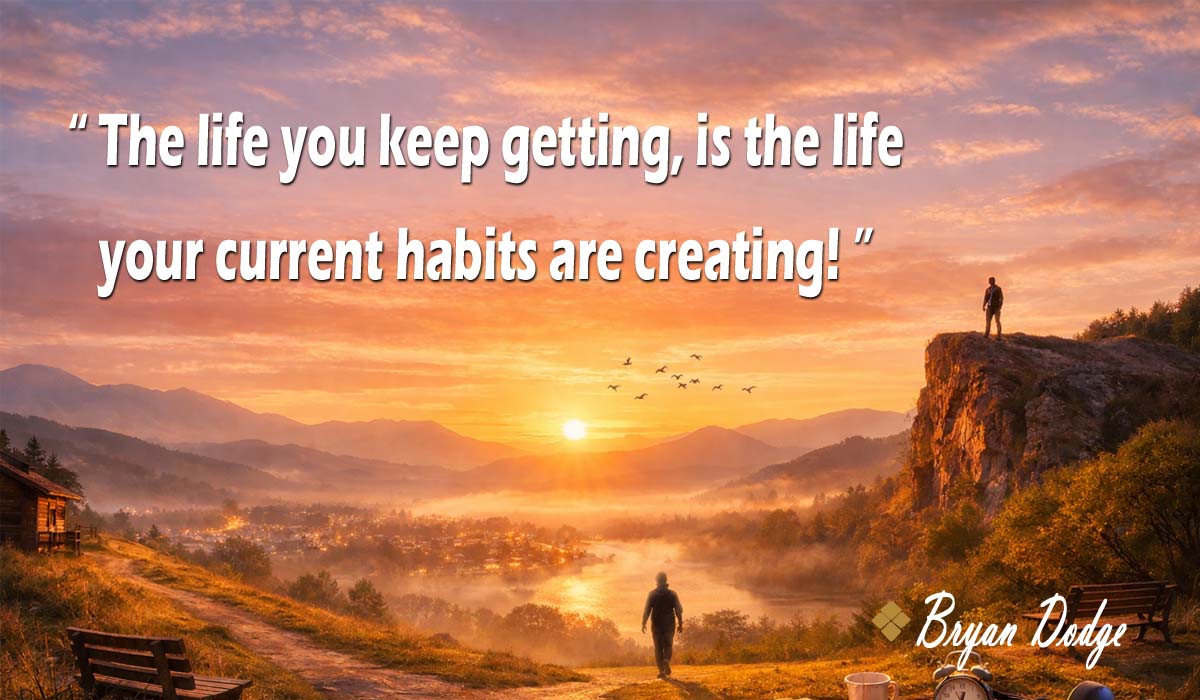
Goals tell you where you want to go. Systems are the daily habits and routines that actually get you there. If you want to be a writer, your goal might be to finish a novel, but your system is writing every day for an hour before work. The system is what actually produces the result.
Focus more energy on building good systems than on obsessing over goals. If you build the right daily habits, the goals take care of themselves. A person who exercises regularly will eventually get fit. A person who saves money consistently will eventually build wealth. A person who reads daily will eventually become knowledgeable.
Start small with your systems. Don’t try to wake up at five in the morning, meditate for an hour, exercise, journal, and read before work if you currently do none of those things. Pick one habit, make it ridiculously easy to do, and stack it onto something you already do every day. Once that habit is automatic, add another one.
Schedule Your Priorities
We all say certain things are priorities, but then we never actually make time for them. If something is truly a priority, it needs to be on your calendar. You schedule meetings and appointments, so why wouldn’t you schedule time for your health, relationships, and personal growth?
At the beginning of each week, look at your calendar and intentionally block out time for your most important activities. Schedule your workout times. Schedule family dinners. Schedule time to work on your side project or creative hobby. Treat these appointments with yourself as non-negotiable.
When someone asks you to do something during that time, you can honestly say “I’m not available then” because you’re not. You have a commitment, and that commitment happens to be to yourself and your priorities.
Protect Your Energy
Having your best year requires energy, and energy is a limited resource. You need to be intentional about what and who gets access to your energy. This means learning to say no, setting boundaries, and removing or limiting things that drain you unnecessarily.
Pay attention to how different activities and people make you feel. Do you feel energized or depleted afterward? Some things that drain your energy are necessary and unavoidable, but many aren’t. You have more control than you think over how you spend your time and who you spend it with.
Learn to say no without over-explaining or apologizing excessively. “That doesn’t work for me” or “I’m not able to commit to that right now” are complete sentences. People who respect you will accept your boundaries. People who don’t respect your boundaries aren’t people you need to prioritize.
Review and Adjust Regularly
Intentionality isn’t something you practice once in January and then forget about. It’s an ongoing process of checking in with yourself and making course corrections. Set up regular reviews to assess how you’re doing.
Monthly reviews work well for most people. Set aside an hour at the end of each month to look back at what you accomplished, what you didn’t, and why. Celebrate your wins, even the small ones. Analyze your setbacks without judgment. What got in the way? What can you learn? What needs to change?
Be willing to adjust your goals and systems as you go. Life changes, circumstances shift, and new information emerges. Flexibility isn’t failure. Sometimes the most intentional thing you can do is recognize that a goal no longer serves you and let it go to make room for something better.
Embrace Imperfect Action
Perfectionism is the enemy of progress. Waiting until conditions are perfect or until you feel completely ready means you’ll never start. Your best year won’t be perfect. You’ll have setbacks, make mistakes, and have days when you fall short of your intentions. That’s not just okay, it’s inevitable.
What matters is that you keep showing up. Progress isn’t linear. Some weeks you’ll crush your goals and feel unstoppable. Other weeks you’ll struggle and barely maintain. Both are part of the journey. The key is to never let a bad day turn into a bad week, or a bad week turn into a bad month.
When you mess up, be kind to yourself and simply begin again. Self-compassion isn’t about making excuses or lowering standards. It’s about treating yourself with the same understanding you’d offer a good friend. Shame and guilt don’t motivate lasting change. Self-compassion does.
In Conclusion
Having your best year isn’t about doing everything perfectly or achieving some impossible standard. It’s about living with intention, making conscious choices, and consistently taking small steps toward the things that matter most to you. It’s about designing a life that feels good to live, not just one that looks good to others.
Start today. Not tomorrow or next Monday. Start with one small intentional choice right now. That’s how your best year begins.

Comments are closed